0800 861 1402
How Long Should a Roof Last in Scotland? Lifespan, Materials & Warning Signs
Scotland’s climate is one of the harshest in the UK for roofing systems. High rainfall, strong winds, freezing temperatures, and constant weather changes all take a toll on roofs over time. One of the most common questions homeowners ask is: how long should a roof last in Scotland?
The answer depends on several factors, including roofing materials, installation quality, maintenance, and exposure to the elements. Understanding the expected lifespan of your roof — and recognising the early warning signs of failure — can save you thousands in avoidable repair costs.
Average Roof Lifespan in Scotland
While manufacturers often quote ideal lifespans, real-world conditions in Scotland tend to shorten them slightly. Below are realistic lifespan expectations based on Scottish weather conditions:
-
Concrete roof tiles: 40–60 years
-
Clay roof tiles: 60–100 years
-
Slate roofs: 80–120+ years
-
Felt flat roofs: 10–20 years
-
EPDM / rubber flat roofs: 25–40 years
-
Lead roofing: 60+ years
Older properties — particularly traditional Scottish homes — often still have original slate roofs that remain structurally sound despite their age, provided they have been properly maintained.
How Scotland’s Weather Affects Roof Longevity
Scotland’s climate presents some of the toughest conditions for roofing systems anywhere in the UK. Constant rainfall increases the risk of water ingress, which over time can lead to rot within roof timbers and insulation. High winds are another major factor, often loosening tiles, ridge caps, and flashings, particularly on older properties. During colder months, freeze–thaw cycles cause moisture to expand and contract, leading to cracks in tiles, mortar, and pointing. In coastal areas, salt-laden air can accelerate corrosion on metal components such as flashings and fixings. Because of these combined factors, roofs in Scotland generally require more frequent inspections and maintenance than those in drier or more stable climates.
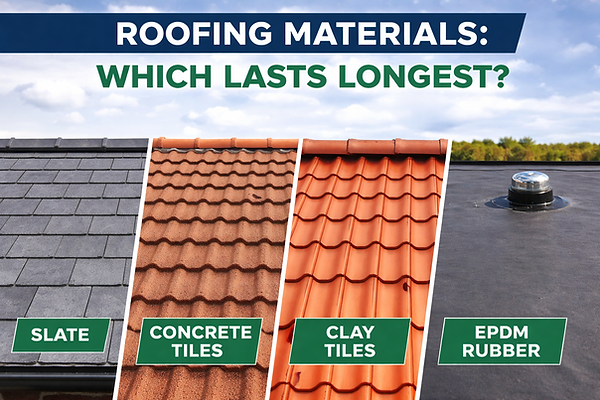
Roofing Materials: Which Lasts Longest?
The material used on a roof plays a major role in how long it will last, especially in Scottish weather conditions. Choosing the right system from the outset can significantly improve durability and long-term performance.
Slate roofing remains the gold standard across Scotland. Natural slate is extremely resilient, handles moisture exceptionally well, and can last well over a century when properly installed and maintained. Many historic Scottish buildings still rely on original slate roofs that have outlived multiple generations, which is a testament to the material’s longevity.
Concrete and clay tiles are also commonly used and perform well in Scottish conditions when fitted correctly. Concrete tiles are durable and cost-effective, although they can lose their surface coating over time. Clay tiles generally last longer but are more brittle and can crack if subjected to impact or movement. Both materials offer reliable protection when combined with quality installation and routine maintenance.
Flat roofing systems typically have a shorter lifespan than pitched roofs, particularly older felt systems. Traditional felt roofs are more prone to splitting and water pooling, especially in heavy rainfall. Modern alternatives such as EPDM rubber and GRP fibreglass significantly outperform felt and are now widely preferred for their durability, weather resistance, and long-term value.
Warning Signs Your Roof Is Near the End of Its Life
Recognising the early warning signs of roof failure is essential to avoiding costly internal damage. Common indicators include missing, cracked, or slipping tiles, which can expose the roof structure to water penetration. Water stains on ceilings or walls often point to ongoing leaks, even if the source is not immediately visible. Sagging roof lines may indicate structural issues, while excessive moss growth can trap moisture and accelerate deterioration. Seeing daylight through the roof space is a clear sign of failure, and if minor repairs are becoming frequent, it may suggest the roof is nearing the end of its usable lifespan. Ignoring these warning signs often leads to damage to insulation, ceilings, and structural timbers.
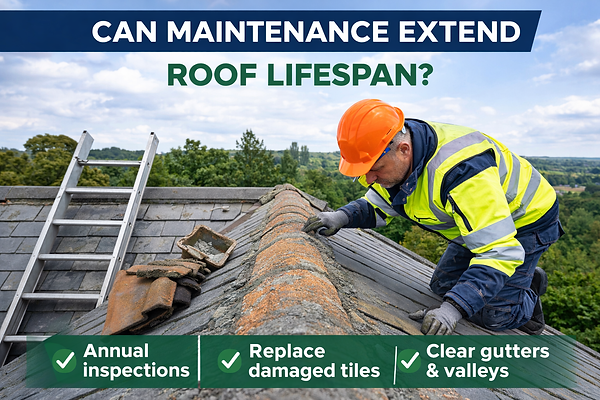
Can Maintenance Extend Roof Lifespan?
Regular maintenance plays a crucial role in extending the lifespan of a roof. In many cases, proactive care can add ten to twenty years to a roof’s service life. This includes having the roof inspected annually, replacing damaged or dislodged tiles as soon as issues are identified, and keeping gutters and valleys clear of debris to ensure proper drainage. Repointing ridge tiles and renewing flashings when necessary also helps prevent water ingress. Preventative maintenance is always more cost-effective than dealing with emergency repairs or premature roof replacement.
When Is Roof Replacement the Best Option?
There comes a point where ongoing repairs are no longer the most practical or economical solution. If a roof is repeatedly failing or approaching the end of its expected lifespan, full replacement is often the better long-term option. A new roof can significantly improve property value, increase energy efficiency, enhance weather resistance, and provide peace of mind knowing the structure is fully protected. A professional roofing assessment will determine whether continued repairs or a complete replacement offers the best value based on the condition of the existing roof.
Final Thoughts
So, how long should a roof last in Scotland? With the right materials, skilled installation, and consistent maintenance, a roof can protect a property for decades, even in harsh Scottish conditions. Understanding the expected lifespan of your roof allows you to plan ahead, avoid unexpected costs, and make informed decisions about repairs or replacement before small issues turn into major problems.